Onefigure,fifteenfinishes
JOURNALPROCESS
How a single white sculpt became a full colorway run for Steven Savoca, and why the least exciting decisions came first.
- DATE
- Nov 4, 2026
- PROJECT
- Steven Savoca
- WORDS
- Clover Studio
- READ
- 5 min read
THE BRIEF
Steven Savoca came to us with a character and an ambition: a collectible figure that could live in a range, not as a one-off. That changes the job. You are no longer designing an object, you are designing a system that has to hold up at one piece and at fifteen.
So we started where most people would rather not: proportions, silhouette, how the figure stands on a shelf, and how it reads from across a room before you can see any color at all.

START IN WHITE
Form before color.THE SCULPT
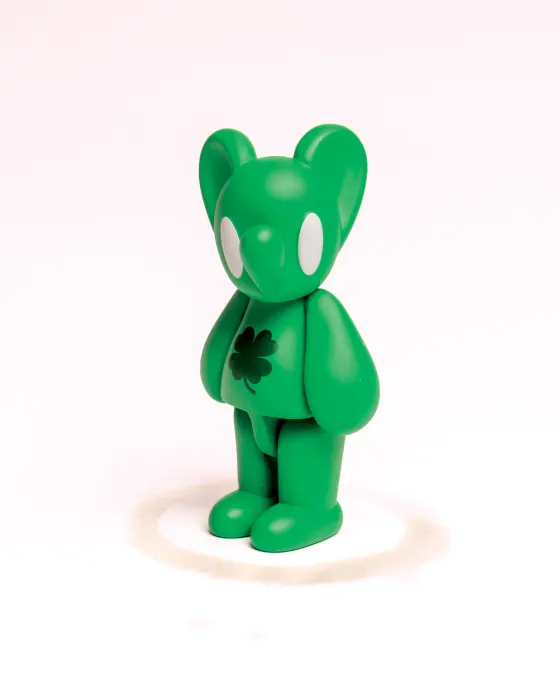
Every early round lived in white. Ears, stance and the weight of the head were adjusted until the figure had a clear personality with nothing else on it. White is unforgiving: it shows every soft edge and every lazy curve.
Once the white figure could carry a picture on its own, we knew color would add to it rather than hide something.
If it doesn't work in white, no colorway is going to save it.
COLOR AS A SYSTEM
Pairs, then families, then the full run.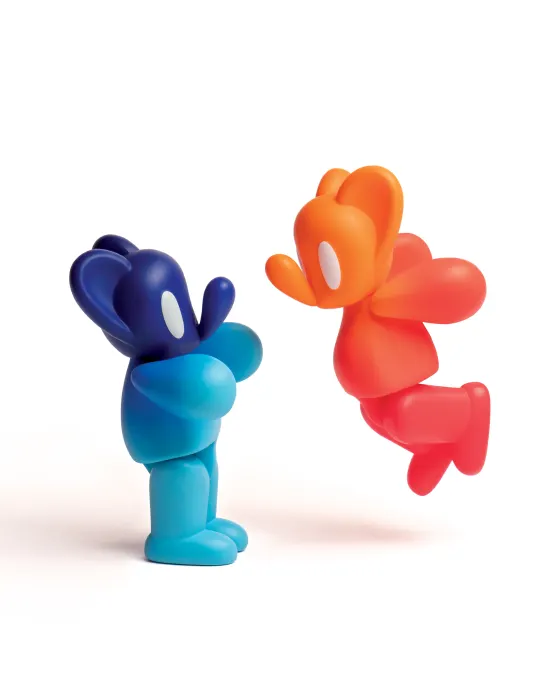
THE SYSTEM
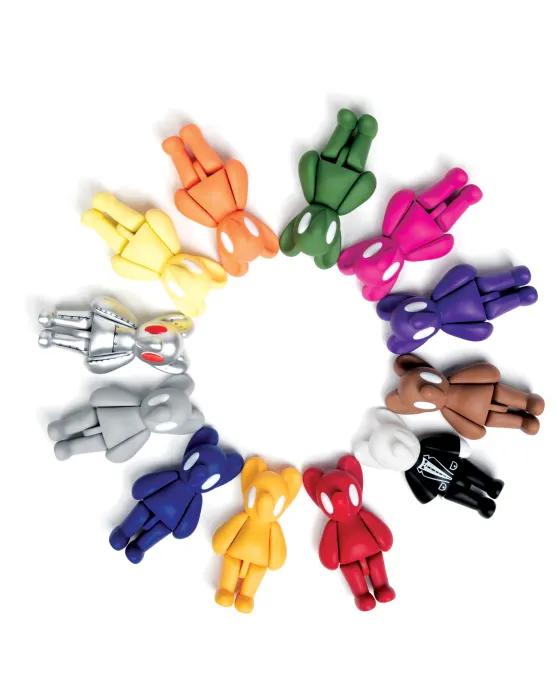
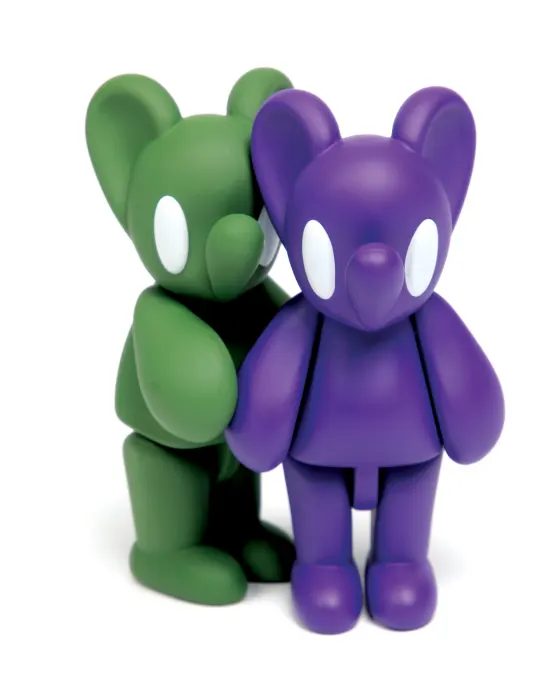
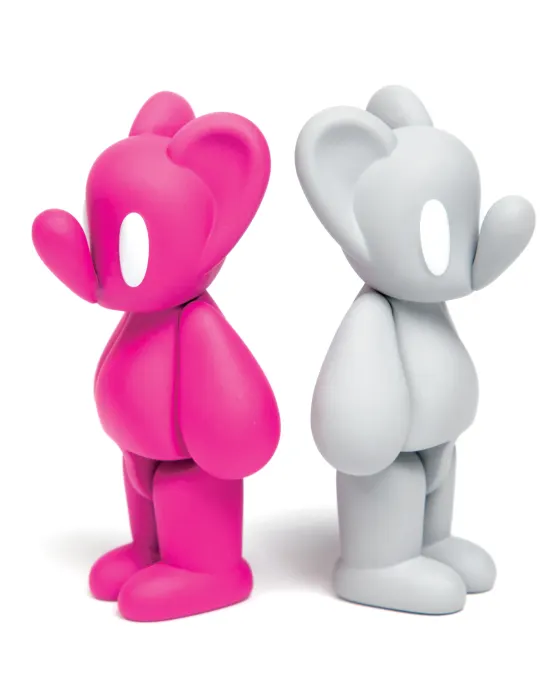
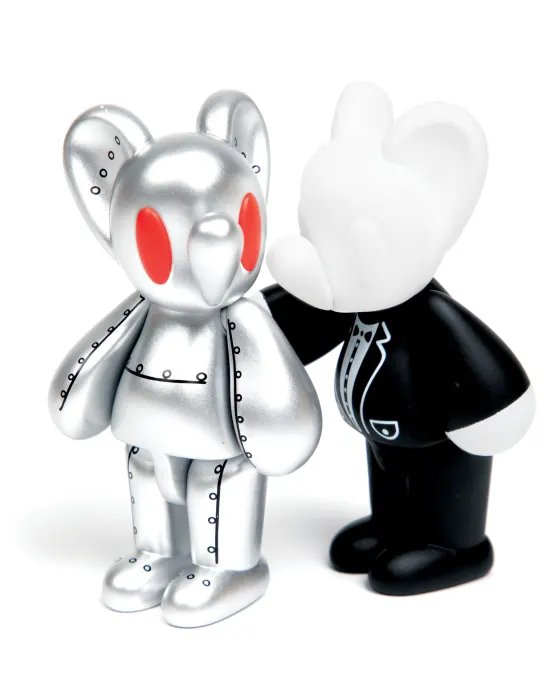
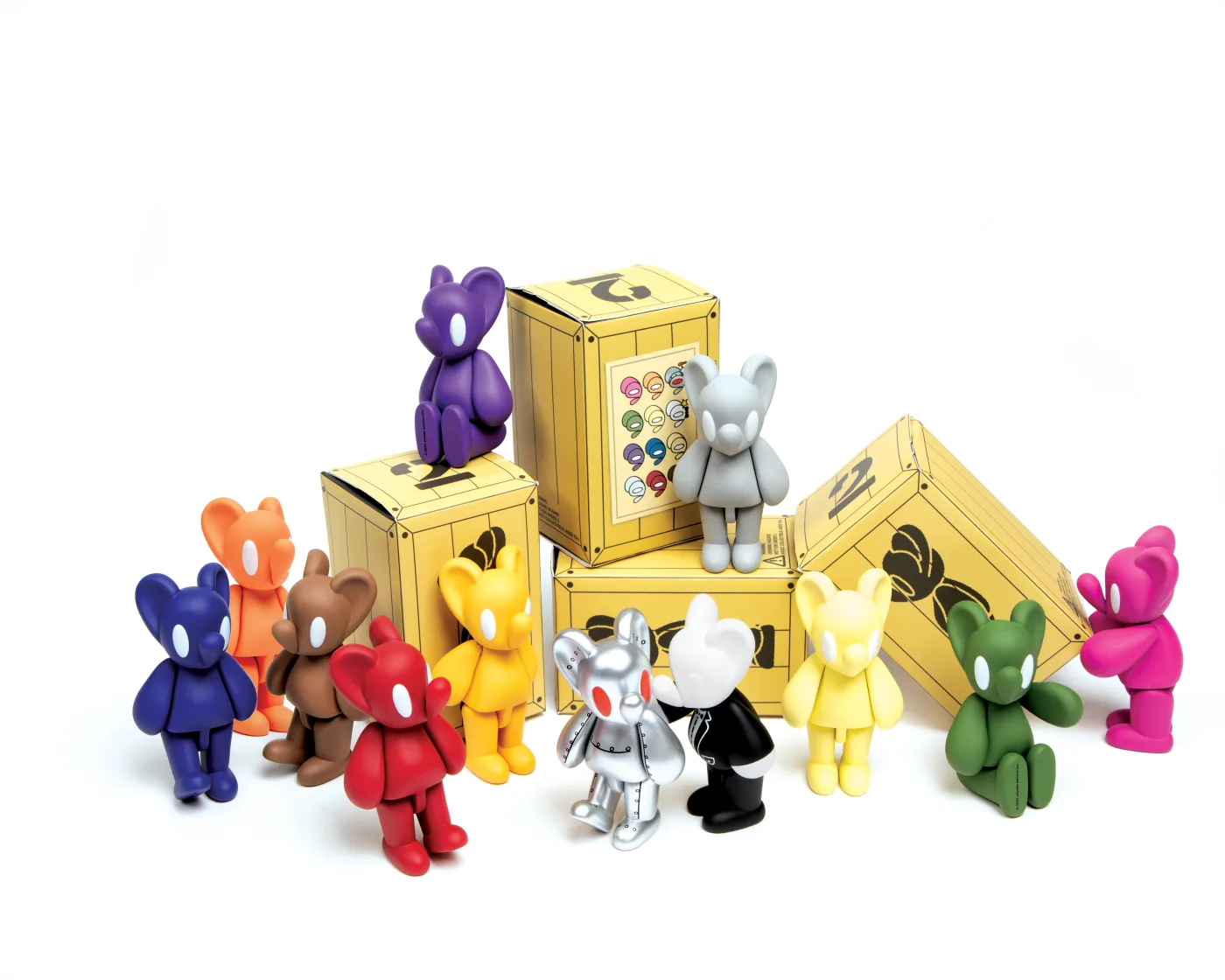
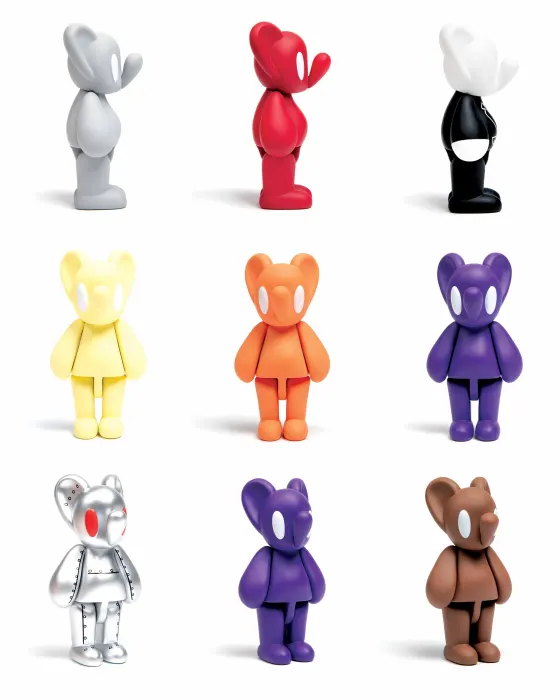
We built the colorways in pairs first, so every figure had a partner it was designed against. Pairs became families: brights, neutrals and a chrome edition that sits slightly apart from the rest.
Photographing them in pairs did the same job on camera. Two figures make a conversation, which gives a still image something to say.
WHAT WE'D TELL YOU
Lock the form before anyone sees a color. Design colorways against each other, never one at a time. And shoot the range the way you want people to collect it: together, in an order that makes sense.
The final run, lined up for the edit.